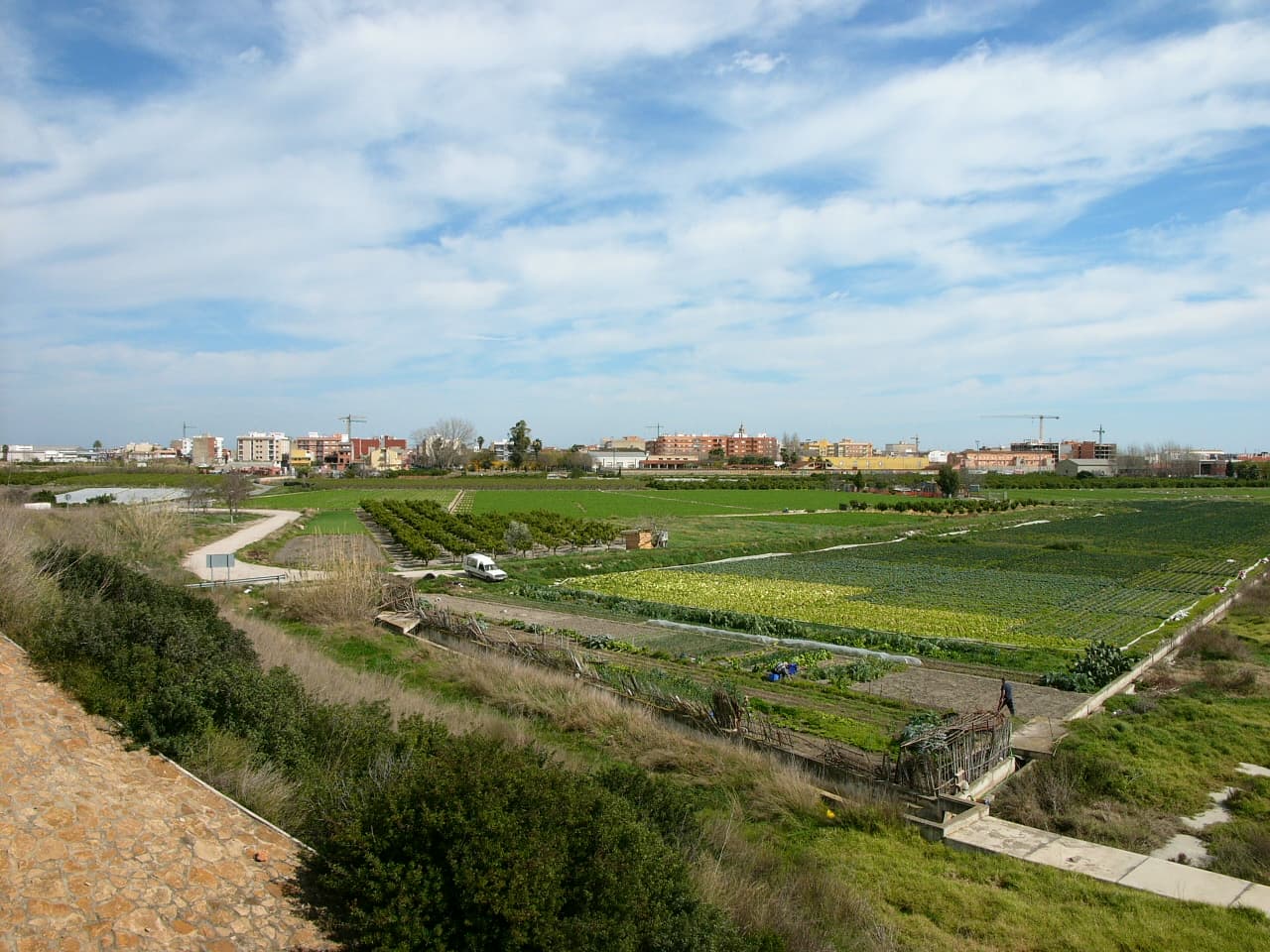
 Llapissera · CC BY 2.5
Town
Sollana is a municipality in the comarca of Ribera Baixa in the Valencian Community, Spain. The municipality includes a second village: El Romaní.
Situated on the floodplain of the Júcar River, the Sollana region is where rice was first grown in Spain 1,200 years ago, and is also the heartland of the famous Spanish dish paella. The economy of the area is still based mainly on agriculture: rice, oranges and livestock.
In the early Middle Ages, Sollana was a small Visigothic settlement. Later, records from the al-Andalus period name it Sulyanah, chief village of a region including the hamlets of Romaní, Alcahecia and Trullás. After the Reconquista in the thirteenth century, James I of Aragon gave it to his vassal Ximén d'Urrea, and it eventually ended up part of the Dukedom of Híjar. In January 1932, during the Second Spanish Republic, anarchists briefly declared a Soviet Republic of Sollana.
The patron saint of Sollana is Mary Magdalene. She is celebrated annually in the summer festivities, which begin on her feast day, July 22, and continue through August 14, when the city council throws a "night of the paellas" in the city centre, and end in late August with a traditional bullring.
Text from Wikipedia (CC BY-SA)

The essentials for getting around Sollana without surprises: how to get there, municipal facts and when it's most worth coming.
Coordinates: 39.2780° N, 0.3815° O
By bus: check the regional bus timetables, they change by season. If you come without a car, confirm the last service back before you leave.
We only list verified numbers. The town hall itself will give you the number of the clinic or the pharmacy.
There are no events in Sollana's calendar yet, so any month works. Ask us about the local festivals: almost every village has one.
Spring
Mild temperatures and the village still quiet.
Summer
Busy summers: book accommodation in advance.
Autumn
Water still warm, lower prices and calm.
Winter
Mild but quiet winter: some businesses slow down.
Keep exploring

