 Medol · CC BY-SA 4.0
Mountain village
Llívia is a town in the comarca of Cerdanya, province of Girona, Catalonia, Spain. It is a Spanish exclave surrounded by the French département of Pyrénées-Orientales. It is named after Livia, the wife of Augustus and matriarch of the Julio-Claudian dynasty. Because of a technicality in the Treaty of the Pyrenees, signed in 1659, that transferred only "villages" in the Pyrenees to France, Llívia, which was a "town", remains under Spanish control. The Segre river, a tributary of the Spanish Ebro, flows through Llívia. It has a population of 1,562 (register office, 2025).
Llívia is separated from the rest of Spain by a corridor approximately 1.6 km (1.0 mile) wide, which includes the French communes of Ur and Bourg-Madame. This corridor is traversed by a road, owned by both France (where it is part of Route nationale 20 and RD68) and Spain (where it is part of N-154). Before the implementation of the Schengen Area in 1995, it was considered a "neutral road", a custom-free route with access for both French and Spanish people; since 1995, there have been no formal borders. The two countries share a hospital in Puigcerdà (which lies close to Llívia), as well as other local initiatives.
Llívia is the site of the Esteve Pharmacy, in Llívia's municipal museum, which has a large albarello display as well as antique drugs and a collection of prescription books. It is also the site of Llívia castle, which is in ruins.
Text from Wikipedia (CC BY-SA)
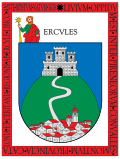
The essentials for getting around Llívia without surprises: how to get there, municipal facts and when it's most worth coming.
Coordinates: 42.4631° N, 1.9797° E
By bus: check the regional bus timetables, they change by season. If you come without a car, confirm the last service back before you leave.
We only list verified numbers. The town hall itself will give you the number of the clinic or the pharmacy.
There are no events in Llívia's calendar yet, so any month works. Ask us about the local festivals: almost every village has one.
Spring
Thaw and green fields. Some mountain access can stay tricky until May.
Summer
Long days and cool nights. The best time for hikes.
Autumn
Forests at their best and far fewer people.
Winter
Serious winter at this altitude: snow likely and chains in the car. Check the state of the roads before heading up.
Keep exploring

