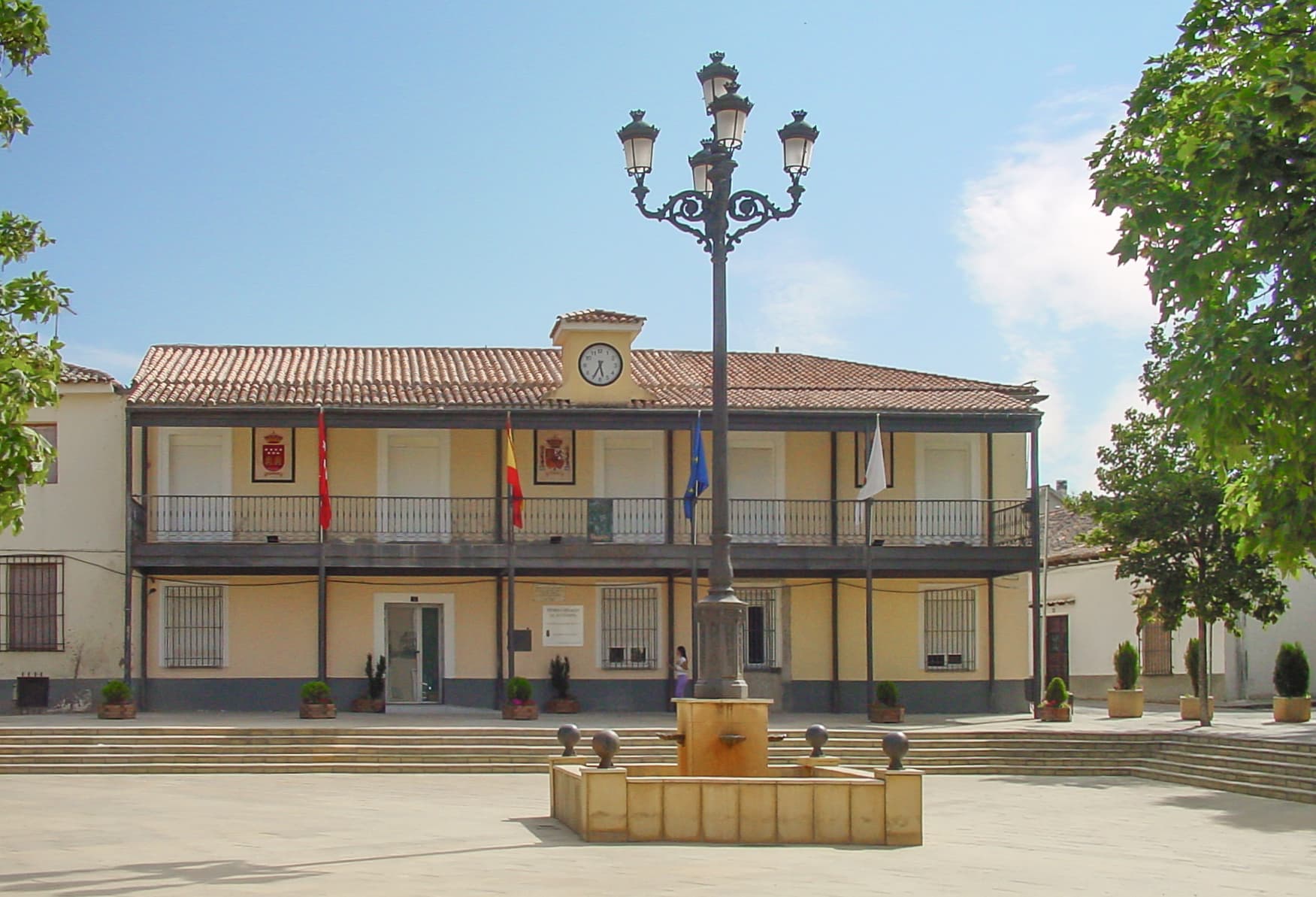
 Wikimedia Commons · CC BY-SA 3.0
Town
Daganzo de Arriba is a Spanish municipality in the Comarca de Alcalá, located in the north-east of Autonomous Community of Madrid. It has a population of about 9,000 (including the residents of the permanent camping that is in the town), of which are mostly young families, in more recent times people have been purchasing homes in the new housing subdivisions that are being built and residing within those new neighborhoods.
It is 27 km to the east-northeast of Madrid and 11 km to the north of Alcalá de Henares. It has an altitude of 673 meters above sea level and has a municipal area of 4,325 hectares.
The village is surrounded by small hills. From north to south, the river Torote runs through the village, in whose margins was located the first settlement of this town, in the same place where the church of Nuestra Señora del Espino is, and stream Valseco.
There are two industrial parks which collectively employ about 1,800 workers, of which 800 are residents of the town. The rest come from other nearby municipalities.
It has an important agriculture according to the area of the municipality, which is quite extensive and of acceptable quality.
The climate that dominates the area is characterized by very high summer temperatures and low winter temperatures. Rainfall in summer is almost zero and medium in periods of autumn and winter, therefore is unevenly distributed throughout the year. The average annual temperature is 14.5 °C with temperatures ranging from 27 °C in summer to 5 °C in winter.
Text from Wikipedia (CC BY-SA)

The essentials for getting around Daganzo de Arriba without surprises: how to get there, municipal facts and when it's most worth coming.
Coordinates: 40.5448° N, 3.4579° O
By bus: check the regional bus timetables, they change by season. If you come without a car, confirm the last service back before you leave.
We only list verified numbers. The town hall itself will give you the number of the clinic or the pharmacy.
There are no events in Daganzo de Arriba's calendar yet, so any month works. Ask us about the local festivals: almost every village has one.
Spring
Fields in bloom and good walking temperatures.
Summer
Hot at midday; festivals tend to cluster in these months.
Autumn
Golden light, mushroom season and fewer visitors.
Winter
Cold and short days. Life gathers in the bar and the square.
Keep exploring

