 Rodelar · CC BY-SA 4.0
Town
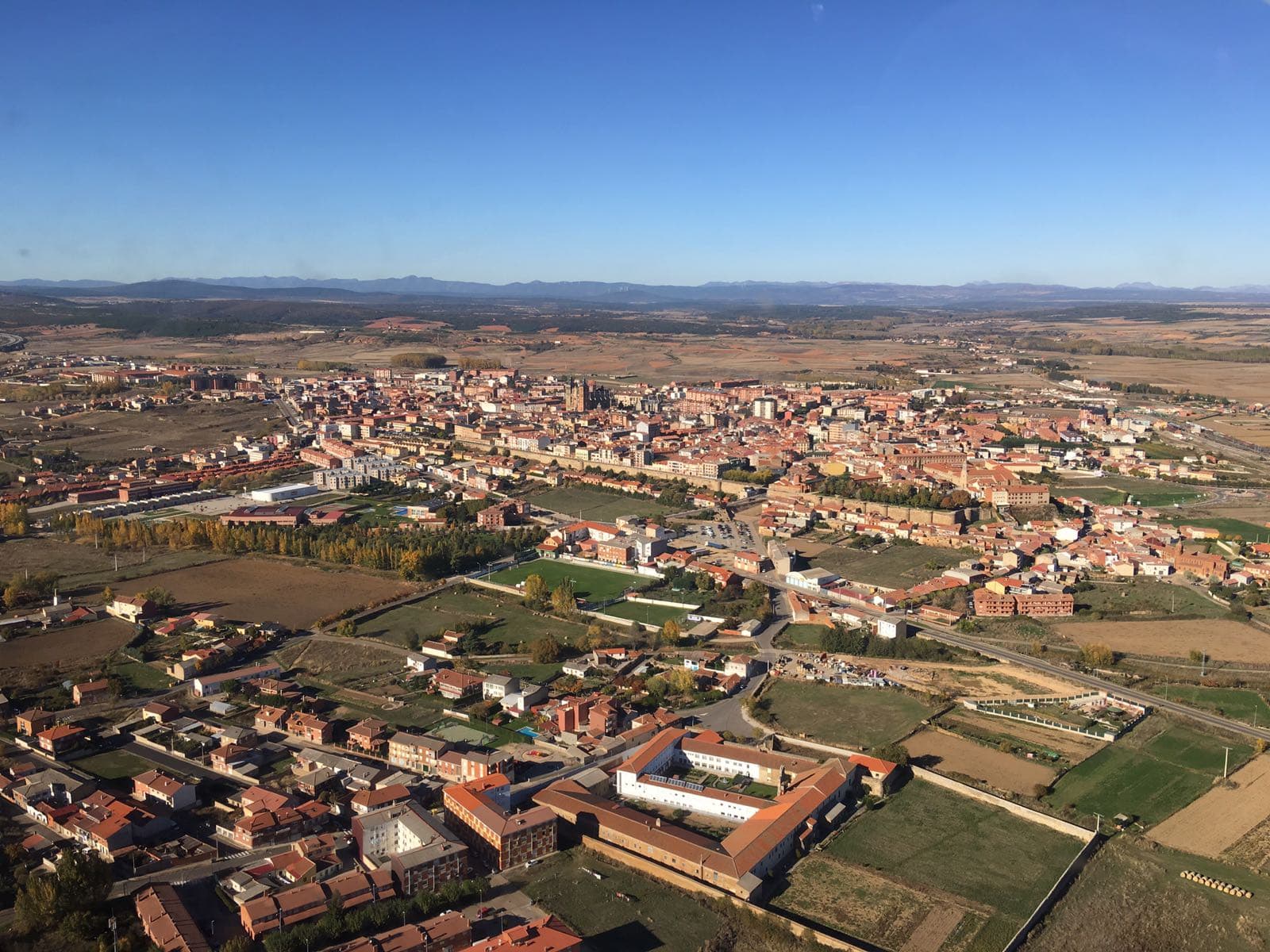
Astorga (Spanish:, Estorga in the Leonese dialect of Maragatería) is a municipality and city in Spain, located in the Province of León, within the autonomous community of Castile and León. Situated at the transition between the Páramo Leonés and the Montes de León, it serves as a central hub for the regions of Maragatería, La Cepeda, and the Ribera del Órbigo. The city is the seat of one of Spain's oldest and most extensive dioceses, with jurisdiction over half of the province of León and parts of the provinces of Ourense and Zamora. It is also the head of the judicial district number 5 of the province of León.
Founded as a Roman military camp for the Legio X Gemina in the late 1st century BC, it soon transitioned into a civilian settlement known as Asturica Augusta and became the capital of the Conventus Asturum. It developed as a key communication hub in northwestern Iberia and enjoyed prosperity during the first two centuries of the Common Era due to gold mining, earning the description vrbs magnifica from Pliny the Elder. By the mid-3rd century, it likely became an episcopal see, with Basílides as its first bishop. Following the barbarian invasions, it was part of the Kingdom of the Suebi and was captured by Muslim forces under Tariq in 714, though it was reconquered by the Asturian monarchy later that century. In the late 10th century, it faced repeated Muslim assaults led by Almanzor.
From the 11th century, bolstered by the Way of St. James, the city experienced gradual development, with the Church playing a prominent role. In 1465, Henry IV of Castile granted Álvaro Pérez Osorio, Count of Trastámara, Lord of Villalobos, and Castroverde, the title of Marquis of Astorga, transitioning the city from a free status to a feudal condition.
Text from Wikipedia (CC BY-SA)

Keep exploring
Where to eat
We don't have verified restaurants here yet, but the larder of Castilla y León already says a lot.
See the restaurants on the mapWe haven't verified any table with its owner in Astorga yet. In the meantime, these are the restaurants mapped in the surrounding area.
Up to 30 km around, according to OpenStreetMap and Overture Maps. No ratings or prices: call before you go.
120 restaurants
120 restaurants
Astorga · in the village+34 987 618 880View on the mapWebsite
Astorga · in the village+34 987 602 326View on the map
Astorga · in the village+34 987 615 613View on the mapWebsite
Astorga · in the village+34 987 602 064View on the mapWebsite
Astorga · in the village+34 987 617 866View on the mapWebsite
Astorga · in the village+34 613 782 082View on the map
Astorga · in the village+34 987 603 175View on the mapWebsite
Astorga · in the village+34 987 196 633View on the map
Astorga · in the village+34 987 602 212View on the mapWebsite
Astorga · in the village+34 987 618 463View on the mapWebsite
Data from OpenStreetMap (ODbL) and Overture Maps (CDLA-Permissive-2.0): what has been mapped with its name. If your restaurant is missing or you want to manage it, sign up as a professional.
For a coffee, a drink or a bite in the village.
Data from Overture Maps (CDLA-Permissive-2.0). No opening hours: call before you go.
What people eat in Castilla y León when they eat well.
Suckling lamb in a wood-fired oven, with salad and local red wine.
Rice and onion, griddled until crisp.
Hard-paste Castilian cured cheese; with candeal bread and a young red.
Ribera, Toro, Bierzo: several serious wine appellations in the region.
Almost every village has its market day and its producers: the cheesemaker, the baker, the vegetable garden next door. Ask at the tourist office or the bar on the square; they'll tell you where to buy straight from the maker.
We haven't confirmed Astorga's market day. Every village has its own: better to ask than to make it up.
Data from Overture Maps (CDLA-Permissive-2.0). No opening hours: call before you go.

